
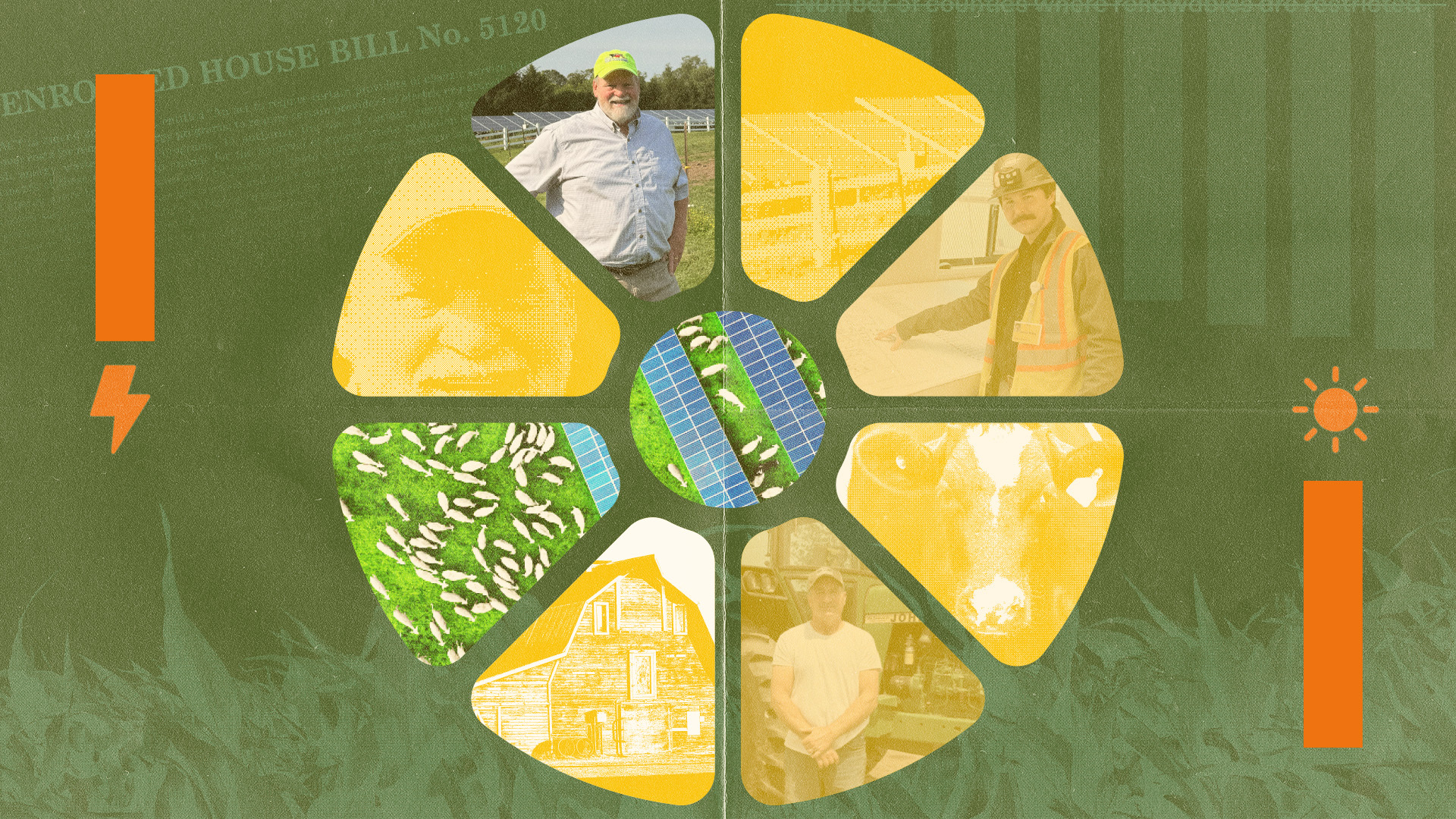
© 2025 Andrew Hartnett/Evergreen Action
Rural landowners want the same things as most Americans: the freedom to make decisions about their own property, the ability to support their families, and the opportunity to pass on their way of life to future generations.
But as economic uncertainty, rising input costs, and generational turnover continue to reshape agriculture and land use, many rural landowners are looking for ways to keep their land and keep generating income. Many are turning to clean energy leasing. It’s a way to add another “crop” to their field and keep their farms family-owned and operated.
Evergreen Action and the Private Property Rights Institute (PPRI)—two organizations with different ideological roots but shared goals around energy independence, individual freedoms, and rural economic development—partnered to interview rural stakeholders in Michigan and Pennsylvania about their experiences with energy siting on their land and in their communities. Protecting Property Rights, Powering Rural Economies includes case studies of farmers, township officials, and county leaders with firsthand experience navigating these issues.
The takeaways were clear: Rural landowners want the freedom to decide what’s best for their property, and many are voluntarily choosing to lease their land for energy infrastructure as a way to generate revenue, continue to own their operations, and make ends meet for their families. But too often, that opportunity is blocked by misinformation, permitting delays, and politically motivated restrictions that undermine landowners’ right to make decisions about their own property.
This economic opportunity requires a siting and permitting system that supports, rather than hinders, that right. These resources are intended to guide local decision-makers, legislators, and energy developers as they work to improve permitting processes.
Five Key Findings
Hear Directly From Farmers and Decisionmakers In Michigan and Pennsylvania

© 2025 Andrew Hartnett/Evergreen Action
Farmers in Michigan and Pennsylvania want the freedom to lease clean energy on their property to support their businesses and the local economy. Local leaders support landowner rights, see solar as an economic and national security benefit, and support clear, transparent zoning standards.
Protecting landowner freedom and streamlining energy development are not mutually exclusive goals; in fact, they are in the same vein.
Here’s what landowners and decisionmakers are saying in their own words, and the policies that make their needs possible.
Policy Recommendations
Evergreen and the Private Property Rights Institute’s in-depth analysis includes an overview of the policy landscapes in Michigan and Pennsylvania, policy recommendations for key stakeholders, and facts addressing common misinformation for renewable energy projects.
To support responsible energy siting in rural communities while respecting local values, landowner rights, and economic opportunity, we recommend the following actions by state leaders, local governments, and developers:
For State Governments
For Local Governments
For Energy Developers
More Resources for Legislators, Decisionmakers, and Advocates
About the Authors
Evergreen Action and the Private Property Rights Institute come to the issue of energy development and generation with different institutional priorities but a shared commitment to energy independence, individual freedoms, and strong local economies.
Evergreen Action
Evergreen Action is a national policy and advocacy organization focused on advancing an equitable and thriving clean energy future.

The Private Property Rights Institute (PPRI)
The Private Property Rights Institute (PPRI), rooted in conservative principles, is committed to defending private property rights and limiting unnecessary government overreach.