This explainer explores an emerging opportunity for affordability in New Jersey through their Virtual Power Plant Program, and the importance of getting the regulations done right. This piece highlights the advocacy Evergreen and partners took in order to shape the program so that it could deliver meaningful benefits to all customers.
Virtual power plants have the potential to improve grid reliability and reduce the need for costly new infrastructure. This is only possible after there are adequate policies in place, meaningful utility business model reform, and a commitment to ensuring savings reach all customers.
After a long period of relatively flat energy demand, we’re now seeing record levels of “load growth” across the US. Virtual power plants (VPPs)—which aggregate thousands of distributed energy resources (DERs) like rooftop solar, in-home batteries, and smart thermostats to “virtually” balance power supply and demand—have emerged as an innovative energy solution to get more capacity out of our existing system. As policymakers look to better leverage VPPs, New Jersey is leading the way by creating a best-in-class model that other states could replicate.
Governor Mikie Sherrill hit the ground running this year, tackling energy affordability head-on. On the very first day she took office, she signed Executive Order No. 2 (EO2) in which she declared the electricity affordability crisis “an emergency that warrants decisive leadership and coordinated action”. She directed the New Jersey Board of Public Utilities (NJBPU) to consider a list of strategies to lower electricity prices for New Jerseyans; one of those strategies was harnessing community power through VPPs. EO2 states that VPPs could lower peak demand by 10-20% in New Jersey.
An Already Constrained Region
Actions like these become all the more important when you zoom out and look at the levels of energy grid constraint within PJM Interconnection, the regional transmission organization (RTO) coordinating the wholesale electricity market across 13 Mid-Atlantic states, including New Jersey, and Washington, D.C. In July 2026, the PJM capacity auction hit its clearing price cap—a $325 per megawatt-day limit on what PJM can pay generators to be available to meet future demand—for a third consecutive year. This trend is largely driving higher electricity bills in New Jersey.
The region also continues to fall short of providing enough electricity and storage needed to address rising demand, due in large part to PJM’s own mismanagement of its system, which caused clean energy projects to die on the vine as they waited in the lengthy “queue” to plug into the grid. At the same time, the Trump administration restricted the development of much-needed clean sources like offshore wind and utility-scale solar. Because of this perilous combination of skyrocketing demand and limited supply, electricity prices are going up for ratepayers, and they don’t appear to be slowing down anytime soon in most places.
$467The annual amount saved by the average New Jersey household, if state leaders implement a combination of key policy actions outlined in a new report from Synapse Energy Economics Evergreen Collaborative and Natural Resources Defense Council
Luckily, near-term solutions are on the horizon. An Evergreen-NRDC New Jersey energy affordability playbook modeled by Synapse found that continued state policy action on clean energy, among other policy solutions, could help save the average New Jersey household $467 per year—a 12% reduction in costs by 2030. This could save the state $14.3 billion from 2026 to 2030 compared to the status quo.
The NJBPU VPP Program Straw Proposal
As part of their implementation plan for Governor Sherrill’s second Executive Order, the NJBPU released their Virtual Power Plant Program Straw Proposal in July of 2026—a foundational first step in developing a comprehensive framework that each electric distribution company (EDC) will have to abide by when developing their VPP program. NJBPU staff proposed a phased approach to setting up the VPP program. Phase 1 is an interim program that will run from 2027-2029, which allows all New Jersey EDCs to integrate their existing demand response programs, advanced metering infrastructure, and direct load control platforms into an intermediate VPP program.
Phase 2 (2029 and onward) is about formalizing these programs, setting up a long-term, open-access program that lets customers easily choose between participating through the EDC or a third-party aggregator. The second phase also leaves room for VPP participation in the wholesale market, which is crucial as regional transmission organizations (RTOs) and independent system operators (ISOs) look to implement the Federal Energy Regulatory Commission’s Order No. 2222. This order specifically tasks RTOs and ISOs with figuring out ways to let aggregations of DERs participate in the wholesale market, as traditional utility-scale projects do. The NJBPU is specifically asking EDCs to design their permanent programs with this future in mind, a true sign that VPPs have scaled.
An Opportunity to Weigh In
To ensure advocates, organizations, and companies had a meaningful opportunity to weigh in on the plan, the NJBPU solicited stakeholder feedback on the 94-page Straw Proposal. Given the short window between the release of the Straw Proposal and the publication of the official requirements, this chance to provide feedback was crucial and potentially decisive.
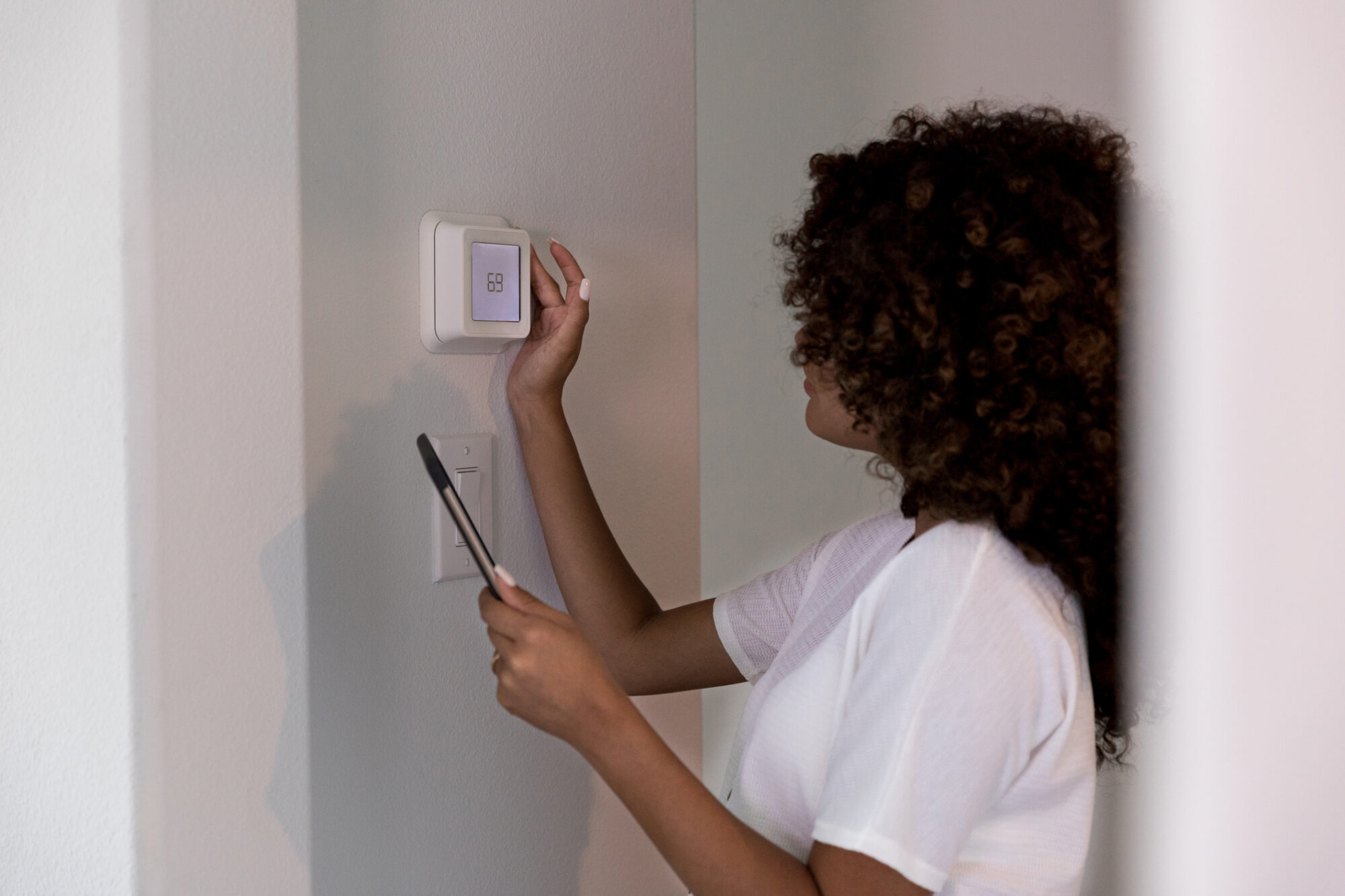
Evergreen jointly submitted comments with the Environmental Defense Fund, in which we highlighted the importance of ensuring the state’s EDC-run VPP programs are accountable, equitable, and sustainable. New Jersey’s programs should go beyond being just another customer incentive program; they should be designed to leverage customers’ energy resources—like rooftop solar and batteries, smart appliances, EVs, and EV charging infrastructure—as key grid assets.
Image: SDI Productions via Getty Images
These devices, in aggregate, can provide significant grid services—like reducing peak demand, improving reliability, and providing emergency services—on par with traditional energy generation resources.
In our comments, we urged the NJBPU to take it a step further and require each EDC’s program to define and prioritize these key performance metrics and outcomes: peak-demand reduction, ratepayer savings, deferred investments in transmission and distribution, customer participation and retention, emissions reduction, and the equitable participation of low-to-moderate income (LMI) households and overburdened communities.
The Missing Pieces
One of the major benefits of VPPs at scale is that they can draw on clean, distributed resources at people’s homes, allowing grid operators to avoid relying on expensive, dirty peaker plants during periods of peak demand and reducing the need to build more power plants. There was significant room for the Straw Proposal to explicitly incorporate emissions reductions as one of the main program objectives, especially as Governor Sherrill moves to prioritize clean energy.
The Straw Proposal included brief references to ensuring equitable access, but we encourage EDCs to establish measurable equity targets and integrate strategies that enable LMI households to participate. This could include establishing an LMI adder for participating households so that they receive higher compensation on their bills. It can also include rebate offerings for appliances like heat pumps and rooftop or balcony solar, so those who might not otherwise be able to access these technologies can afford to do so. These technologies could then be enrolled in the VPP program.
Alignment is Key
But even strong equitable access requirements will fall short if the underlying utility business model and incentives that drive how our electric grid is built and operated remain unchanged. Under the traditional utility business model, utilities earn a return on capital investments, such as poles, wires, and substations, with fewer opportunities to earn a return on lower-cost, lower-emitting, more efficient alternatives such as VPPs. What this means is that there is a misalignment fundamentally baked into the way utilities make decisions before regulators—resources that could save customers money may not earn a return in the same way expensive infrastructure does, creating a financial incentive to invest in pricier projects and sending VPPs to the bottom of the prioritization list. This structural barrier to the deployment of low-cost clean energy resources must change—in New Jersey and across the country.
This misalignment in incentives is exactly why Governor Sherrill’s Executive Order No. 1 (EO1), which directs the NJBPU to examine reform options to the existing utility business model, is so important to the state’s success of a VPP program and overarching affordability and climate goals. Alongside our coalition partners, we have urged the Board to address this inherent imbalance of incentives by requiring utilities to consider lower-cost alternatives, establish a more balanced treatment of capital and operating expenses, reform the return on equity that motivates the utilities to prioritize costly capital expenditures, and, if necessary to fully align incentives with deploying low-cost, low-emitting technologies, consider performance incentives where a clear gap remains.
The opportunity for VPPs to provide grid services and value to customers, which helps avoid expensive infrastructure investments, is real. Now the NJBPU must ensure that the underlying utility business model supports the program, rather than getting in the way of the benefits that could be realized.
A Readily Available Solution
New Jersey is joined by other states working on VPPs, including the neighboring state of New York. In the Empire State, the Grid Reliability and Energy Affordability Transition (GREAT) Act passed the New York State Senate, with hopes of continued progress in the Assembly. The GREAT Act would establish a statewide framework for VPP programs, require utilities to develop participation and compensation structures, and give customers more opportunities to contribute to a cleaner and affordable grid.
“VPPs help put energy choice in consumers’ hands, reducing costs for consumer and grid operators, freeing up near-term capacity, and providing clean electricity when the grid needs it the most.”
We commend the progress New Jersey and New York have made, and encourage other states to follow their lead. Evergreen will continue to meaningfully engage on VPPs in both legislative and regulatory arenas to ensure programs are designed equitably and with an eye towards long-term sustainability.