Wisconsin voters elected leaders to take on energy affordability. Here’s where they should start in 2027.
To: Interested parties
From: Evergreen Action Midwest Advocate Lauren Reeg
Date: Thursday, November 5, 2026
Re: Wisconsin voters elected leaders to take on energy affordability. Here’s where they should start in 2027.
On Election Day, Wisconsin voters delivered a resounding win for lower energy bills and cleaner power. David Crowley will be the state’s next governor and Democratic majorities will lead both the House and the Senate. Come January, Wisconsin will have a government positioned to work together on an ambitious energy agenda. But this election was about more than political victories. Voters expect results, starting with lower energy bills.
Across the state, households, farms, and small businesses are feeling the squeeze. A power bill that keeps climbing is a monthly reminder that something in the system isn’t working, and voters want to know why. What they see is a utility model that rewards building more rather than building wisely, a wave of data centers and other power-hungry corporations racing to connect to the grid, and no state-wide guardrails on who pays for these costs. They also see a better path: one where large new users cover their own costs, utilities have to justify what they spend, and affordable solar, wind, and storage help keep prices steady for everyone. Candidates who offered that path with a credible plan earned the trust of voters.
That trust comes with an obligation to move quickly. Wisconsin’s energy decisions over the next few years, from who gets connected to the grid to which projects utilities are allowed to build and charge for, will shape household bills for decades. The governor’s office has real tools to act right away through regulators, and the legislature can make the strongest protections permanent. Taken together, this is a chance to make affordability the organizing principle of Wisconsin’s energy policy rather than an afterthought.
Here’s the agenda Governor-elect Crowley’s administration and the incoming legislature should pursue in 2027.
Executive Action: What the Governor Can Do From Day One
The governor-elect does not need to wait for a vote to start lowering costs. Appointments, agency direction, and the administration’s influence with regulators are among the strongest tools in state government. Here are three tactics the governor’s office should pursue to lower household energy bills:
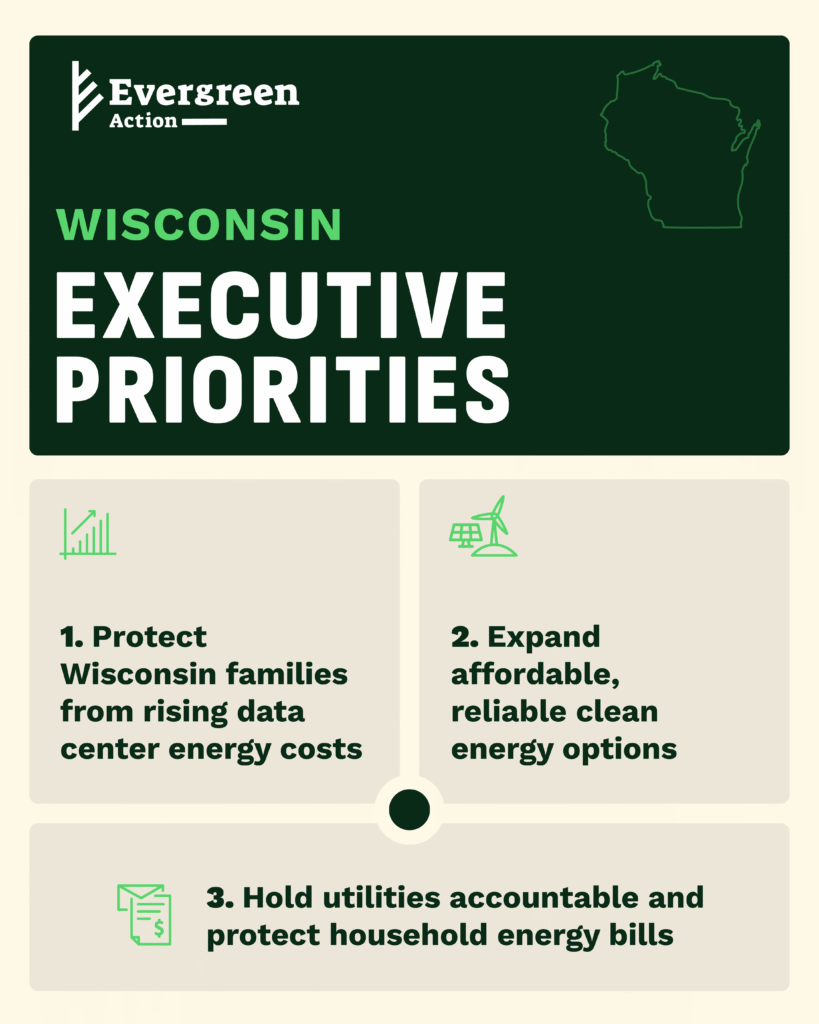
- Protect Wisconsin families from rising data center energy costs: Data centers and other large users are looking to Wisconsin for sites, incentives, and grid capacity. The governor should direct state regulators to set firm terms for serving them. Those new large users should bear the cost of generation, transmission, and distribution—not Wisconsin households or small businesses.
- Expand affordable, reliable clean energy options: Wisconsin has abundant opportunities to build homegrown power that keeps bills low, but outdated rules and slow approvals stand in the way. The governor should direct state regulators to clear those barriers to affordable clean energy development, expand access to customer-owned energy options, and prioritize investments that lower long-term electricity costs for families, farms, and businesses.
- Hold utilities accountable and protect household energy bills: Utilities earn an allowed profit on the infrastructure they build, which rewards spending more rather than wisely, and families are left holding the bill. Through appointments, a strong legislative agenda, and public direction, the governor can build a commission that stops treating rate hikes as routine: one that challenges capital spending plans, holds profit margins down, and rejects unjustified rate increase requests. The attorney general’s office can also reinforce this work by stepping in on behalf of customers in rate cases.
Legislative Action: What Lawmakers Should Pass First
The strongest protections are the ones codified into law by the legislature and a governor’s signature. Aligned majorities can pass safeguards that outlast any one administration to serve Wisconsinites for generations to come. Here’s what the legislature should focus on when the 2027 session convenes:
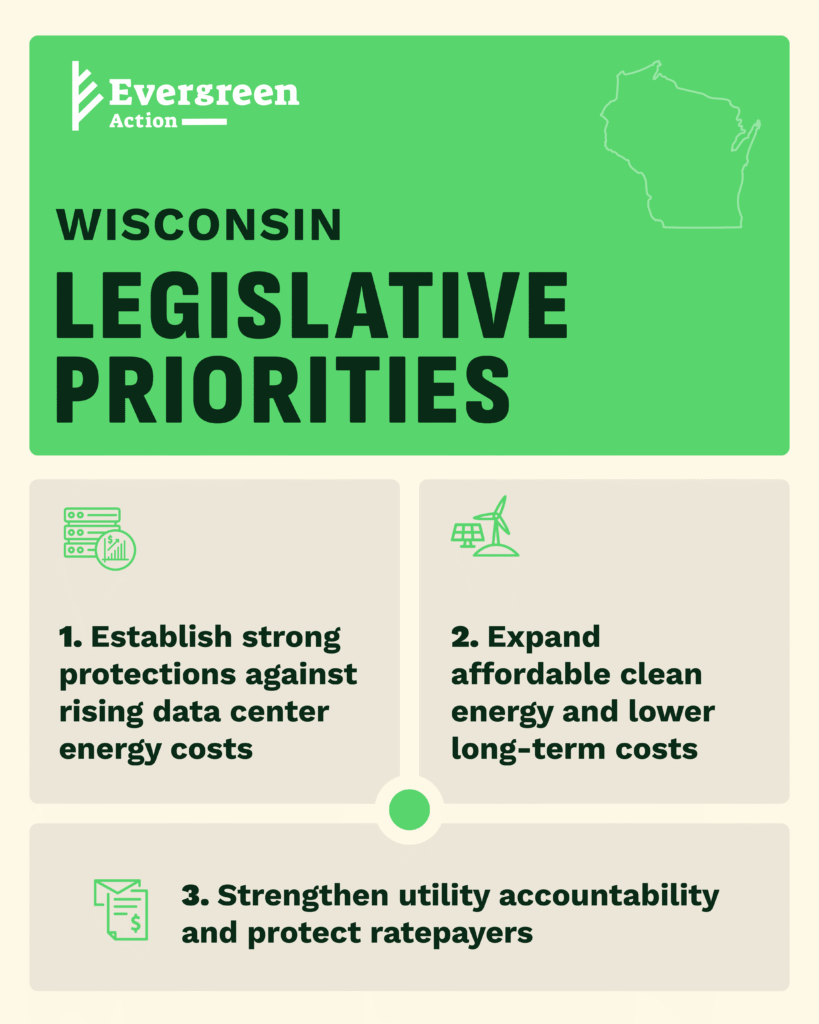
- Establish strong protections against rising data center energy costs: The legislature should guarantee in state law that the growth of data centers and similar large users does not push up electricity costs for existing customers. Wisconsin can still welcome responsible development on fair terms, with transparency about energy and water use. And a dedicated revenue stream from the mega corporations driving new demand can fund clean energy and efficiency programs that lower costs across the system.
- Expand affordable clean energy and lower long-term costs: Solar, wind, and storage built in Wisconsin could keep power prices steady for years, but only if the rules make projects feasible to build and easy to connect. The legislature should advance policies that advance cost-effective clean energy development, expand access to affordable energy options for households, farms, and businesses, and reduce long-term electricity costs and pollution.
- Strengthen utility accountability and protect ratepayers: Lawmakers should strengthen the standards for how utilities request rate increases and give regulators and the public better tools to challenge unnecessary costs. That way, cost control is built into how utilities operate instead of taking a back seat to corporate earnings. Paired with more affordable clean energy options for households and employers, customers would have even more ways to cut what they pay.
The Work Starts Now
Wisconsin has a rare chance to show the country what a government can do when it puts energy affordability and people-focused reforms at the top of the list. A governor and two chambers of the legislature, all elected on a promise to cut costs, can deliver lower bills, cleaner power, and good jobs at the same time—proving that the three go hand in hand.
Wisconsin voters chose a cleaner, more affordable future. The work of building it begins now.
Related News
Minnesota Voters Deliver DFL Leaders Mandate to Build on Clean Energy Progress and “Hold the Line” on Utility Bills
Minnesota Voters Deliver DFL Leaders Mandate to Build on Clean Energy Progress and “Hold the Line” on Utility Bills
Michigan Voters Deliver Democratic Trifecta, Push for Lower Energy Costs and Clean Energy
Michigan Voters Deliver Democratic Trifecta, Push for Lower Energy Costs and Clean Energy
Wisconsin Voters Deliver Democratic Trifecta and a Mandate for Lower Energy Bills