This year’s midterm results didn’t come out of nowhere. Since 2024, Evergreen Action and our partners in the movement have worked hard to show elected leaders that clean energy is the solution to rising energy costs. Candidates built it into their platforms, ran on it and won (see prime examples from Wisconsin Governor-elect David Crowley and Michigan Governor-elect Jocelyn Benson). Now it’s time to turn those campaign promises into governing realities.
Nov 5, 2026
Build more homegrown, cheap, clean power.
Rein in monopoly utilities’ profit-driven rate hikes.
Put guardrails on data centers so they pay their own way.
Voters sent a clear message on Election Day: everything is too expensive and something needs to change. And that has to start with energy prices. Donald Trump spent two years driving up costs, propping up expensive coal and gas and blaming clean energy for the damage. Democrats showed up with solutions: cheap, clean power and accountability for utilities and data centers. Voters rewarded them for it, and new Democratic majorities in Congress, governors, and state legislatures now have a mandate to deliver.
And we are ready to help them do so. This memo lays out Evergreen’s priorities in the six states where we work (Michigan, Wisconsin, Pennsylvania, New York, Maryland, and New Jersey), detailing the specific executive and legislative actions leaders in those states can take to deliver on their clean energy platforms. We also outline how new Democratic majorities in Congress can use their power to hold the Trump administration accountable for high energy prices, while socializing a winning 2028 platform.
The priorities below fall into three main buckets: building more homegrown, cheap, clean power; reining in monopoly utilities’ profit-driven rate hikes; and putting guardrails on data centers so they pay their own way instead of passing the bill for their enormous power demand on to everyone else. Together, they take on the corrupt system voters rejected at the polls, one where utilities, fossil fuel companies, and Big Tech profit while families struggle to keep the lights on.
Michigan: Make Data Centers Pay Their Way and Rein In Rate Hikes
Michigan families are watching their bills climb and need assurance they’ll be protected from more data-center-driven cost increases. Governor-elect Jocelyn Benson and new legislative majorities can change that fast: make data centers cover their own costs, hold utilities accountable, and give Michiganders cheaper ways to get to work, school, and home.
What Governor-elect Jocelyn Benson Can Do
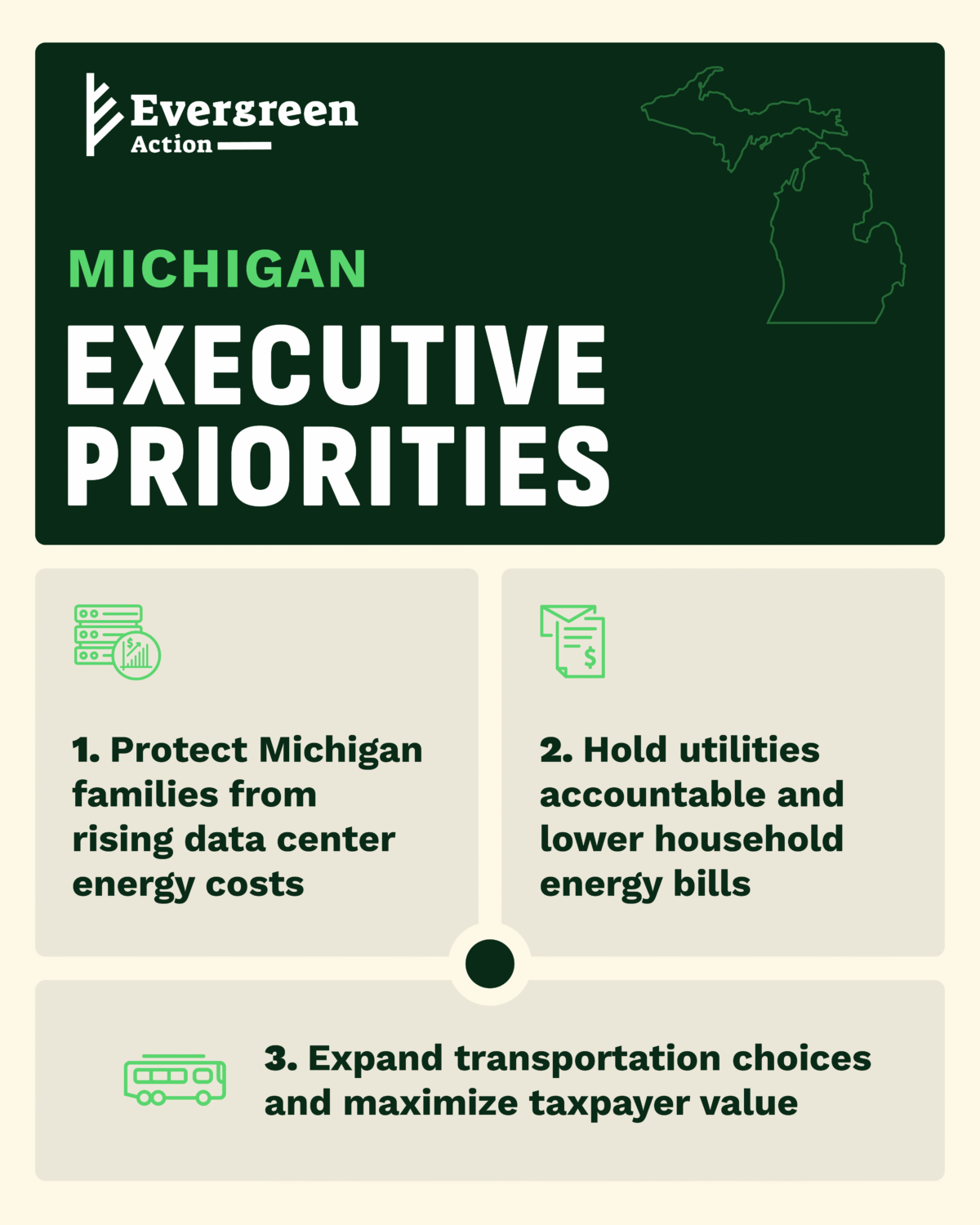
Shield families from rising data center costs: Direct regulators to make large energy users pay their full share instead of passing costs to everyone else.
Hold utilities accountable: Push regulators to scrutinize utility spending and profits and stop unnecessary rate hikes.
Expand transportation choices: Appoint transportation leaders who will prioritize projects that connect communities, grow the economy and give taxpayers the most value. Direct Michigan’s transportation agency to prioritize projects that expand transportation choices, improve affordability, and drive economic development in communities across the state.
What the Legislature Can Do
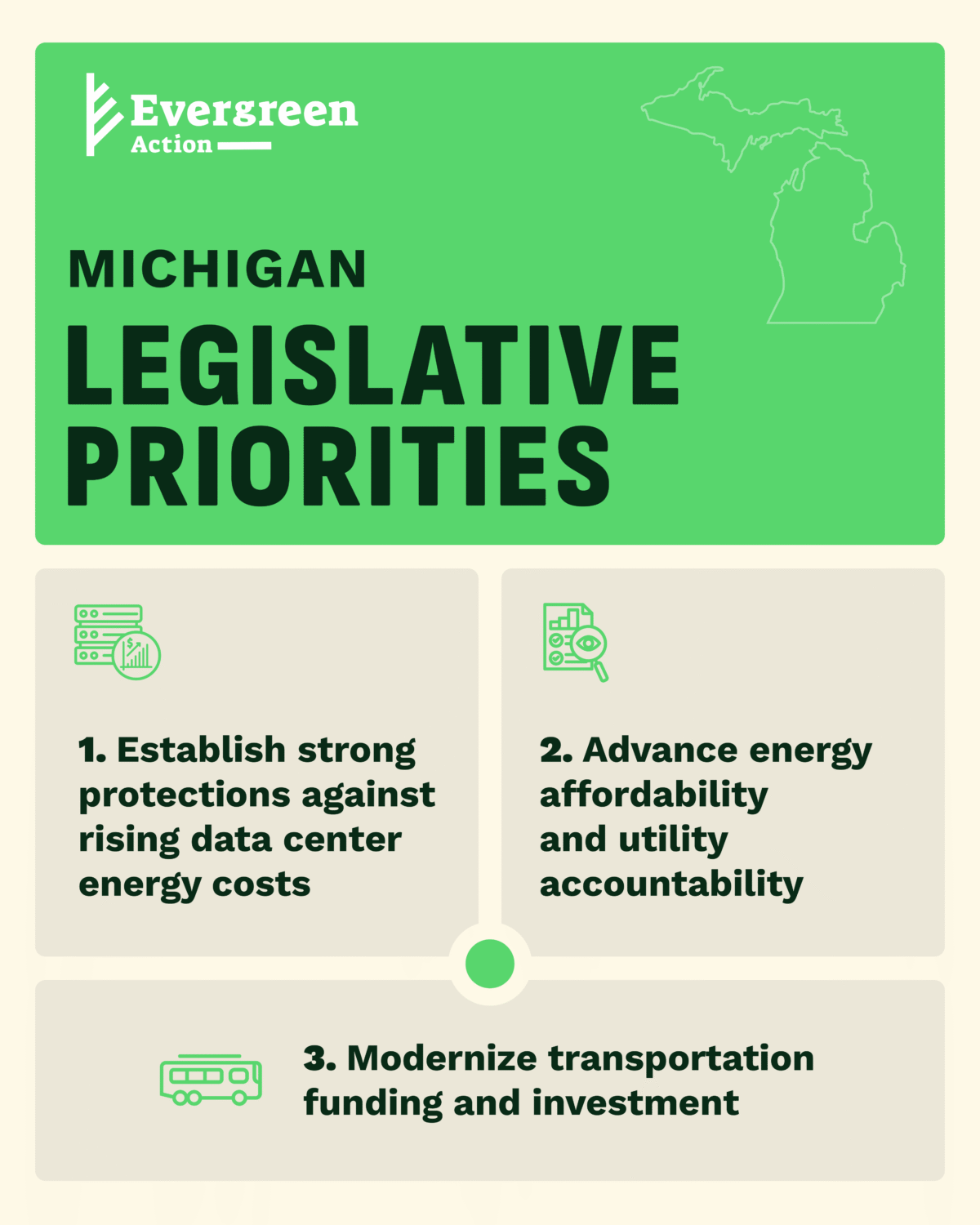
Write strong data center protections into state law: Protect households from the costs of data center growth while requiring data centers to contribute to investments in clean energy and energy efficiency that help lower electricity bills for everyone.
Expand affordable energy options: Guard against unnecessary utility rate hikes and expand affordable energy options for households and businesses.
Modernize transportation funding: Steer spending toward projects that give residents more affordable options ways to get around.
Wisconsin: Build Cheap, Clean Power and Protect Ratepayers
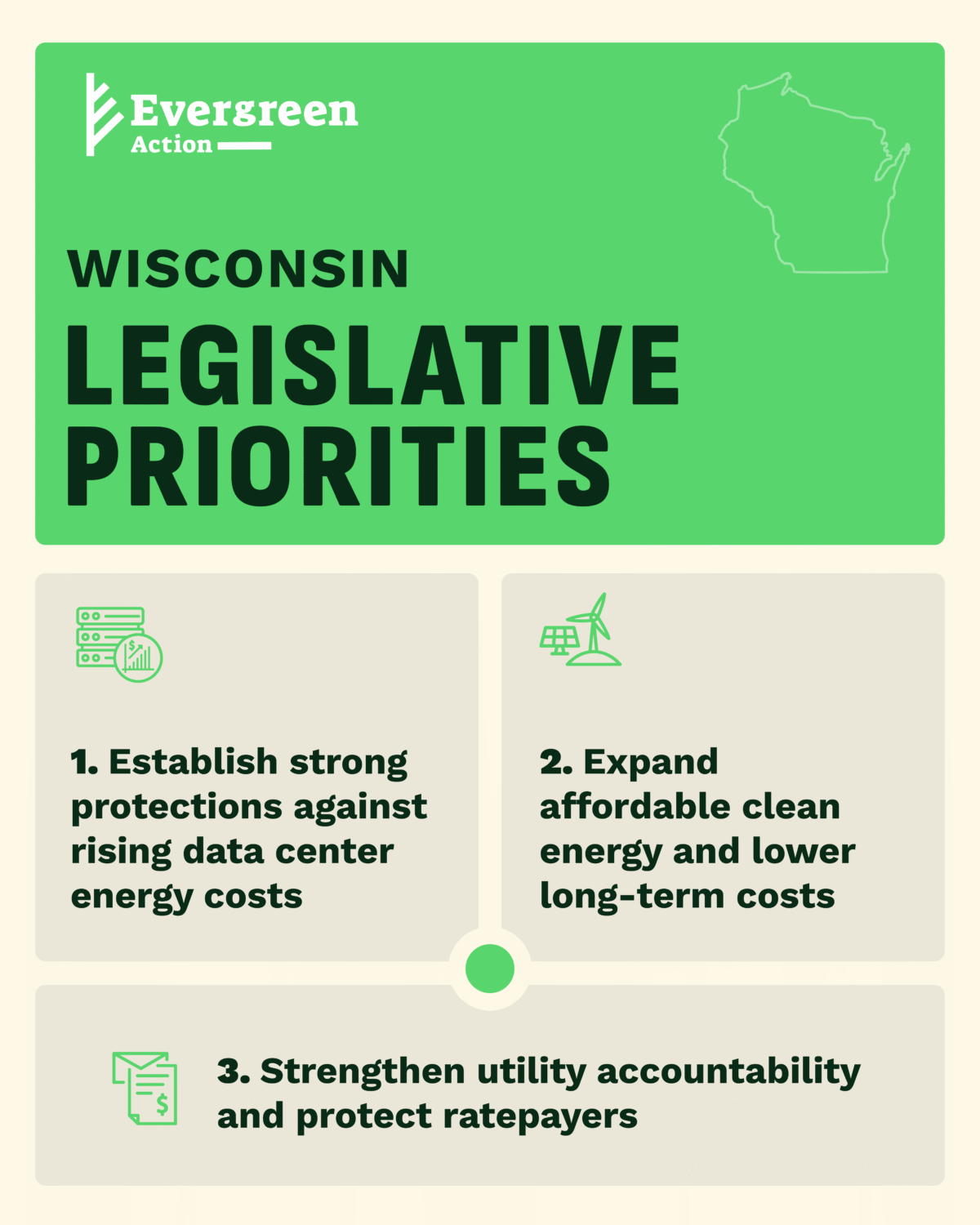
Energy costs were on the ballot in Wisconsin, and Governor-elect David Crowley and new legislative majorities now have the chance to deliver for families. The path is clear: stop data centers from shifting costs onto families, open the door to affordable clean energy, and make utilities plan around what customers can afford.
What Governor-elect David Crowley Can Do
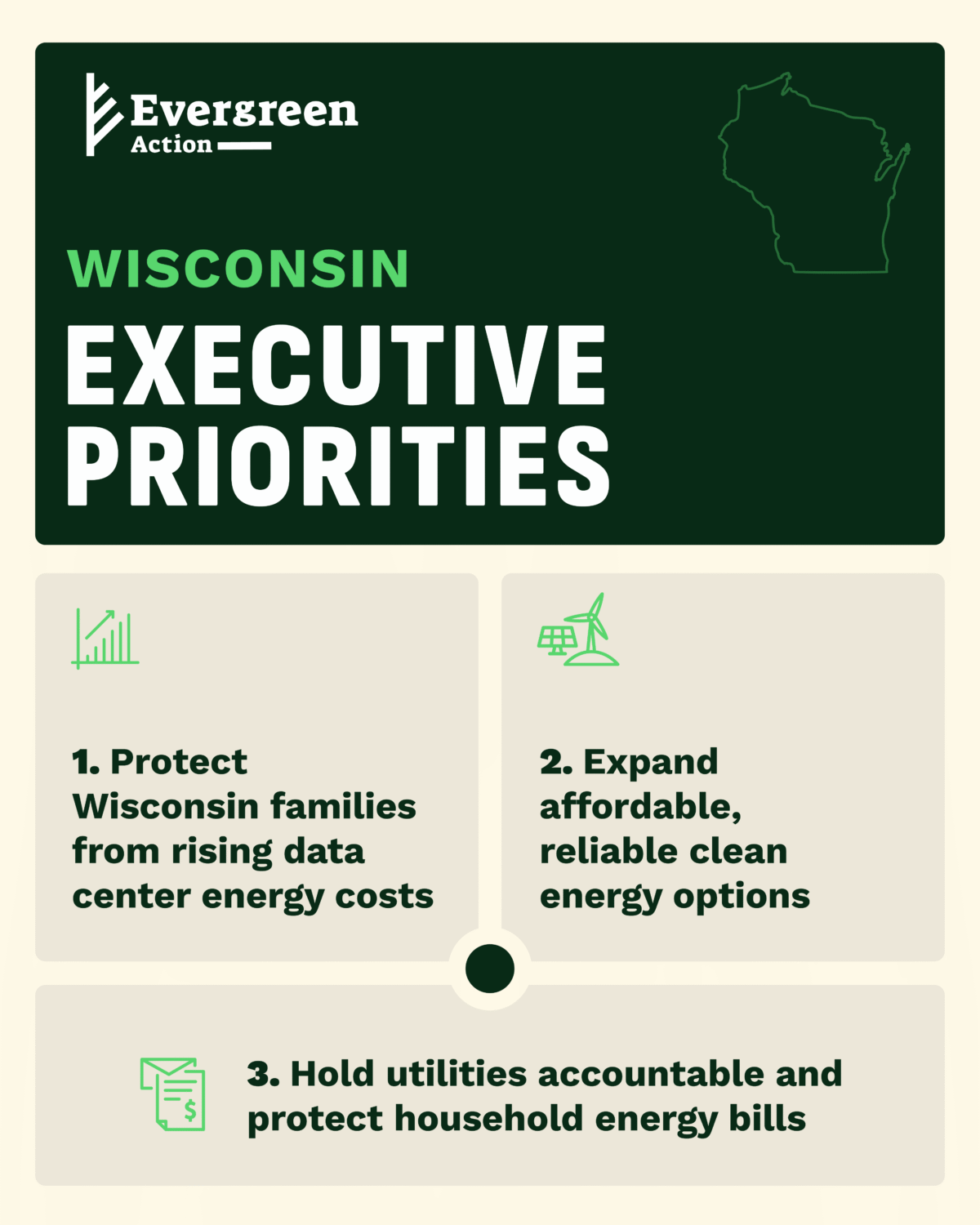
Shield families from data center costs: Direct regulators and the legislature to make large energy users pay their full share instead of passing costs to everyone else.
Open the door to more clean energy options: Direct regulators and the legislature to clear barriers to clean energy and customer-owned options that lower long-term costs.
Hold utilities accountable: Push regulators for stronger oversight of utility spending and long-term plans that put affordability first.
What the Legislature Can Do
Write strong data center protections into law: Protect households from the costs of data center growth while requiring data centers to pay for clean energy and energy efficiency that help lower electricity bills for everyone.
Speed up affordable clean energy: Expand access to cheap, clean energy options to cut long-term costs and pollution.
Strengthen utility accountability and protect ratepayers: Require more transparency in long-term energy planning, strengthen oversight of utility spending and guard against unnecessary rate hikes.
Wisconsin Elects David Crowley to Lower Bills and Make Big Tech Pay Its Own Way
Pennsylvania: Lock in Data Center Protections and Modernize the Grid
The Commonwealth has a head start with executive actions putting guardrails on data center developers and protecting Pennsylvanians from higher energy costs, alongside some serious legislative proposals already on the table. The job in 2027 with Pennsylvania’s first Democratic trifecta in over 30 years is to turn that momentum into relief for Pennsylvania families. Keeping bills down as data centers come online is a goal lawmakers in both parties share, and Pennsylvania can show how to get it done together.
What Governor Josh Shapiro Can Do
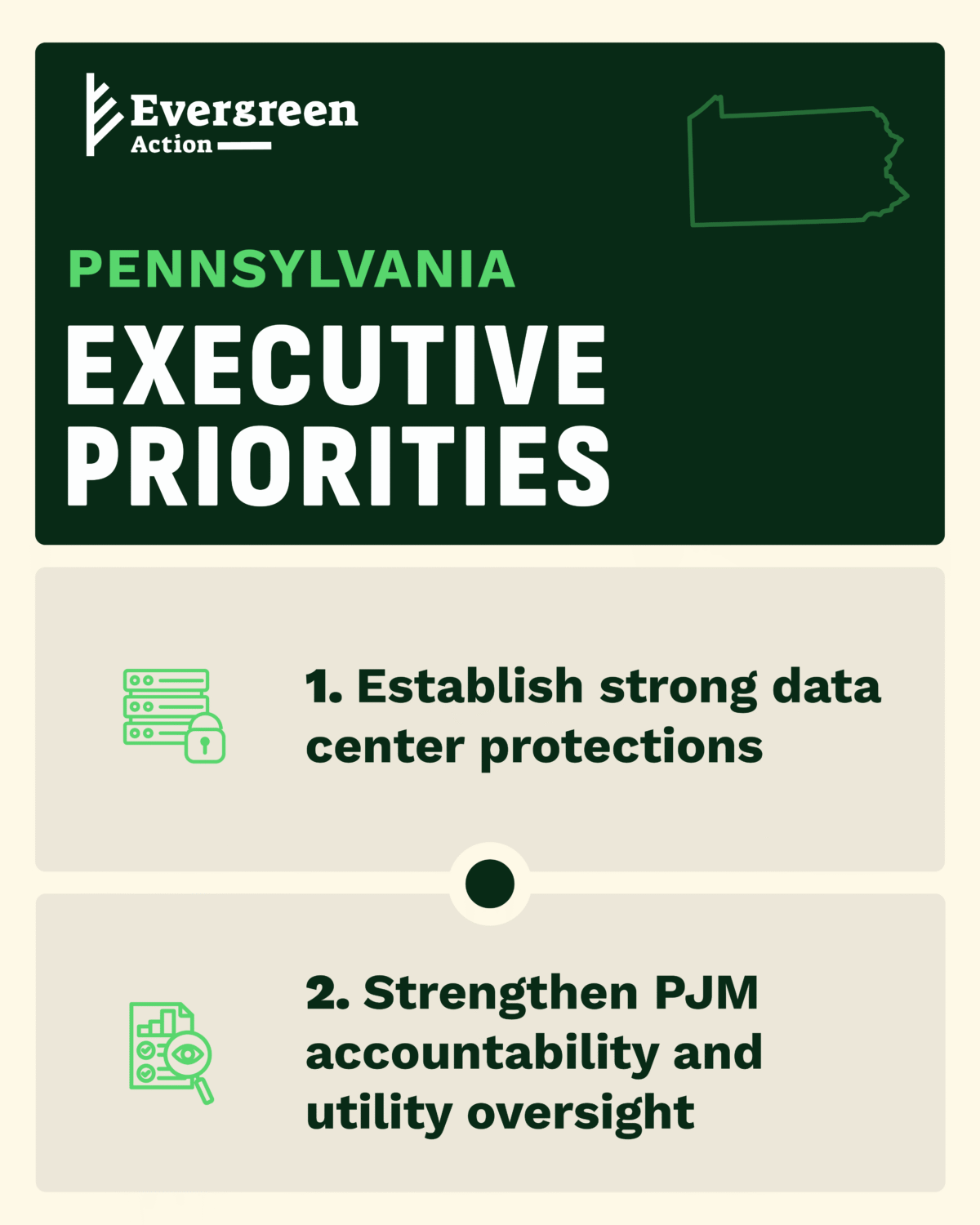
Set clear standards to protect families from data center costs: Build on the state’s existing framework to set clear standards so data centers cover their own costs, bring clean energy supply with them, and build our grid in a way that benefits all Pennsylvanians, not just large corporations.
Strengthen PJM accountability and utility oversight: Work to securePennsylvania a stronger voice at PJM, the regional grid operator, and closer oversight of the dollars spent on transmission and the utility profits that drive up bills.
What the General Assembly Can Do
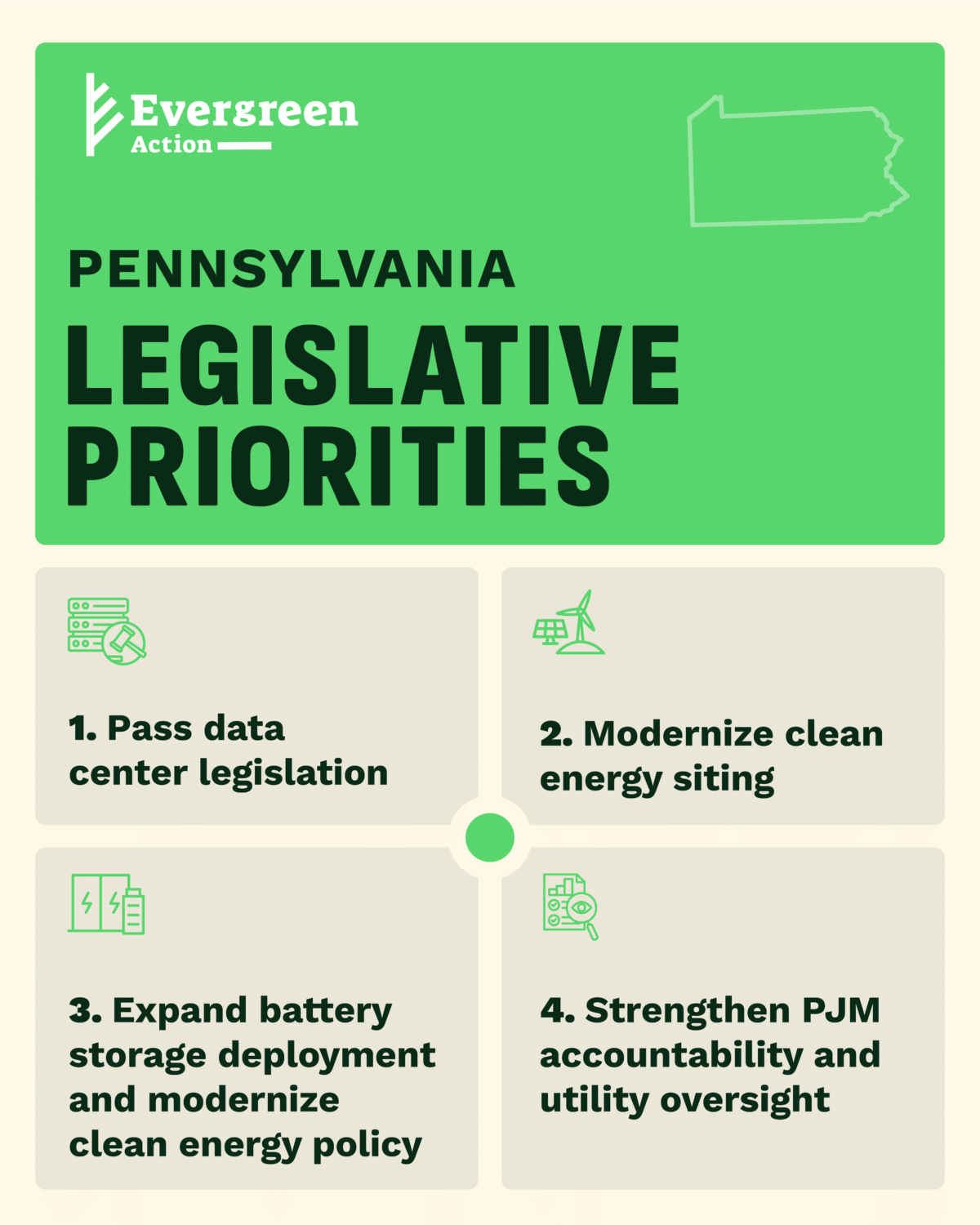
Pass data center legislation: Build on existing proposals to write those protections into law.
Modernize clean energy siting: Set clearer statewide standards so solar, wind and batteries can be built responsibly and faster.
Expand battery storage: Clear the way for more batteries that keep the grid reliable and costs down.
Strengthen PJM accountability and utility oversight: Give Pennsylvania a stronger voice at PJM, the regional grid operator, and closer oversight of transmission spending and utility profits that impact families’ electricity bills.
New York: Finish the Job on Governor Hochul's Affordability Agenda
Governor Kathy Hochul has laid the groundwork with her CHARGE agenda and Grid of the Future initiative. Now it’s time to see it through: deliver the low-cost, reliable clean power New Yorkers were promised, and hold utilities to it.
What Governor Kathy Hochul Can Do
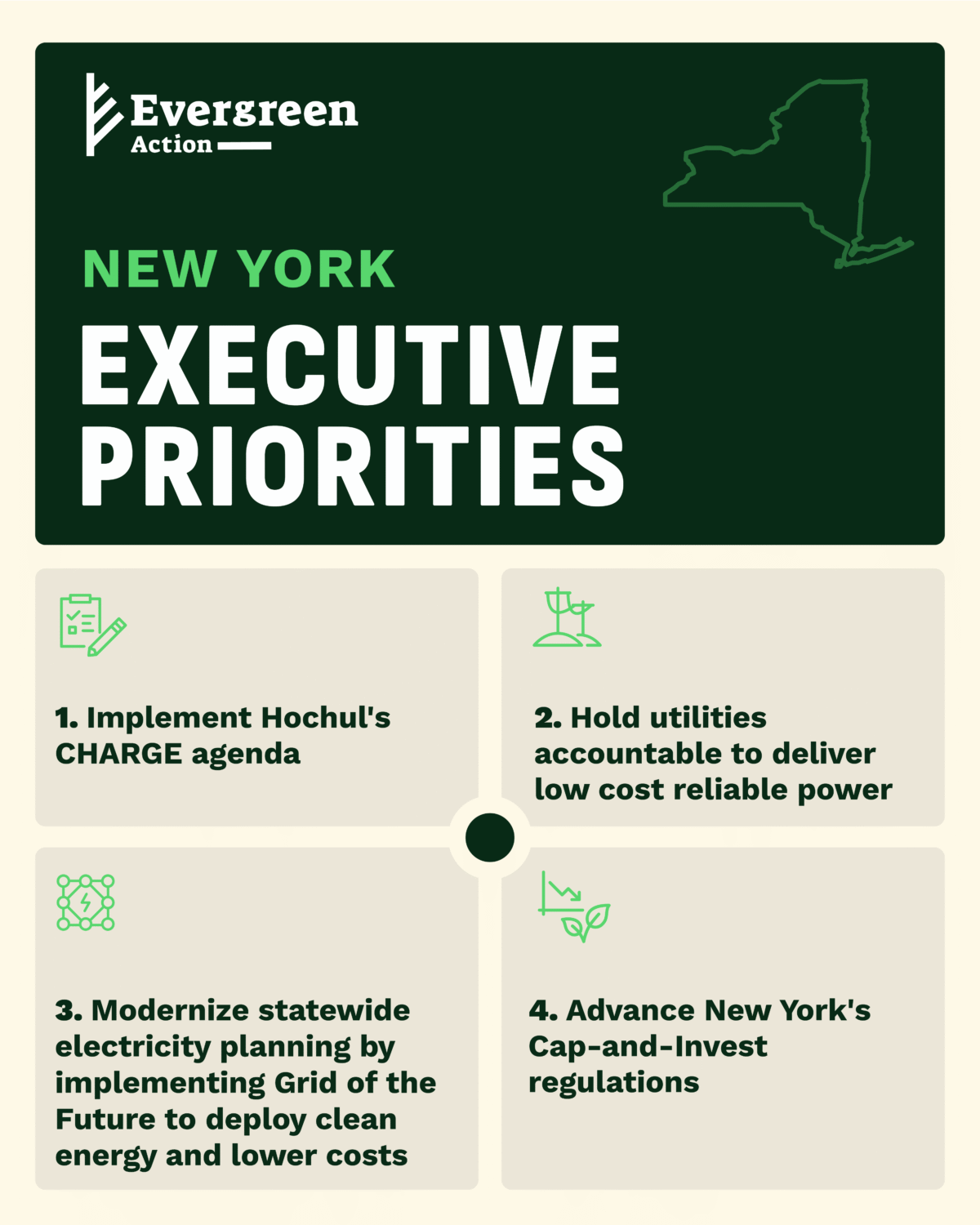
Keep the CHARGE agenda moving: Make sure the state’s new Energy Infrastructure Development Plan puts ratepayer protection, affordability, clean power, and the lowest-cost investments first.
Build the Grid of the Future: Build on Governor Hochul’s existing initiative to better plan for growing demand, new infrastructure to carry power, and expanding clean energy together—with affordability for New Yorkers at the center.
Hold utilities accountable to low-cost, reliable power: Direct state regulators to scrutinize utility spending and lower utilities’ guaranteed profits.
Move Cap-and-Invest forward without further delay: Finalize a transparent process to set enforceable standards for cutting carbon pollution.
What the Legislature Can Do
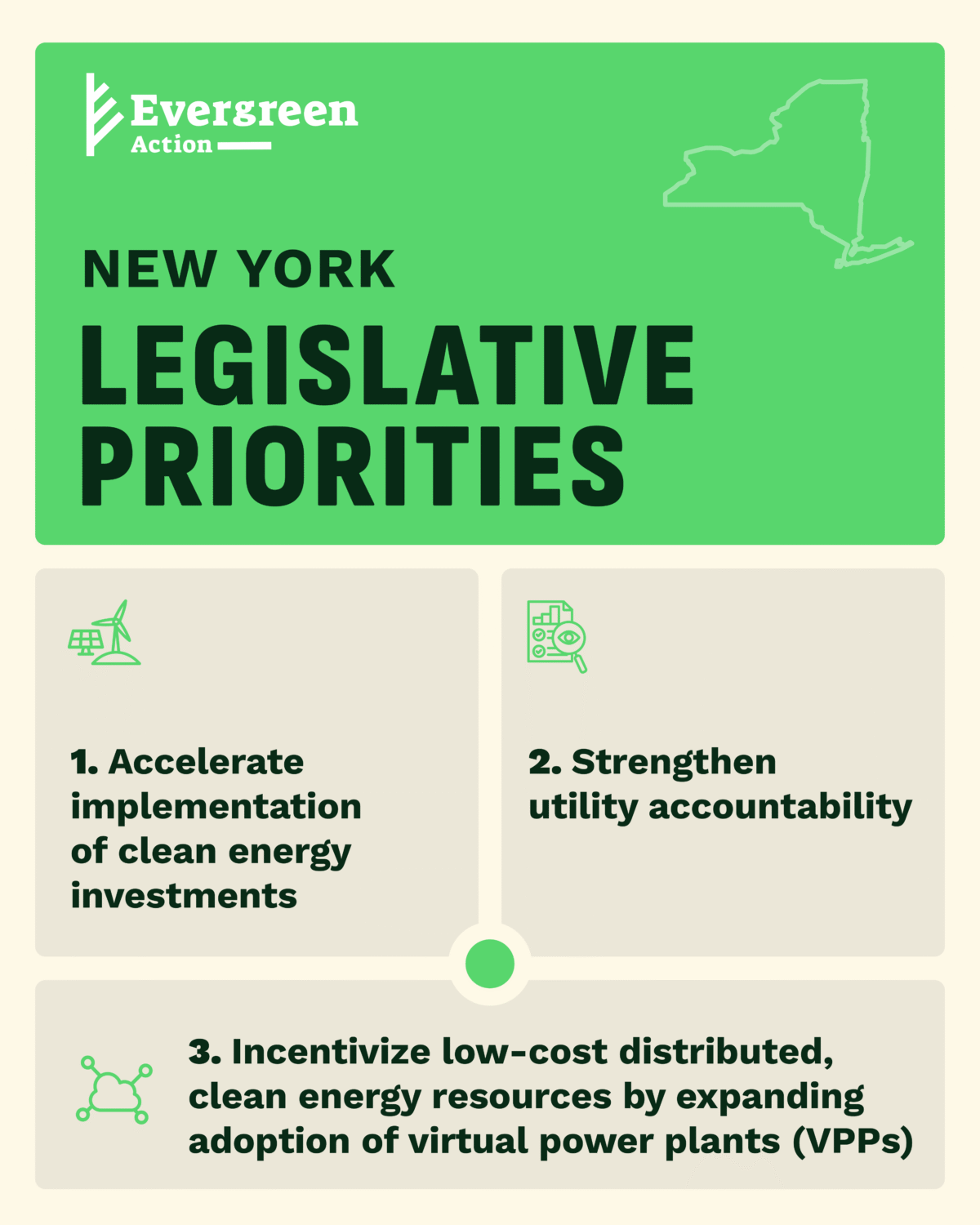
Expand virtual power plants: Link resources like rooftop solar, home batteries and programs that shift energy use away from peak hours so they send power back to the grid when it’s needed most, with fair compensation for the households and businesses that take part.
Strengthen utility accountability: Tighten oversight of utility spending and lower guaranteed profits.
Get clean energy dollars out the door faster: Speed up existing state clean energy programs, including the Sustainable Future Fund.
Maryland: Build More Clean Energy and Get Clean Heat Right
Maryland can lower bills and cut pollution at the same time. In 2027, that means more in-state solar and storage, a fairer deal from the regional grid operator, and an affordable path for families to move off expensive gas.
What Governor Wes Moore Can Do
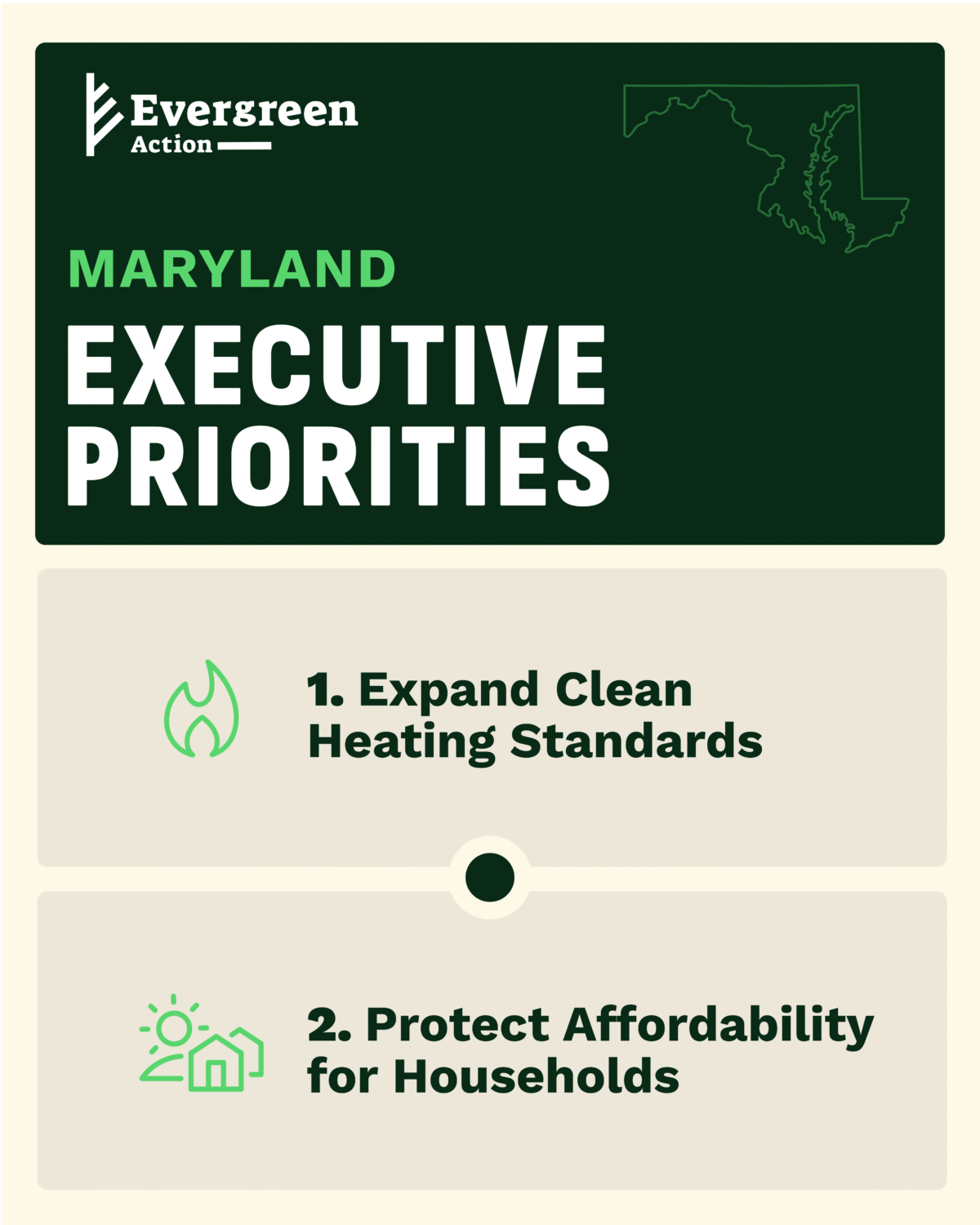
Make clean heat affordable: Keep building out the Clean Heat Standard and Zero-Emission Heating Equipment Standard, prioritizing help for low- and moderate-income households.
What the General Assembly Can Do:
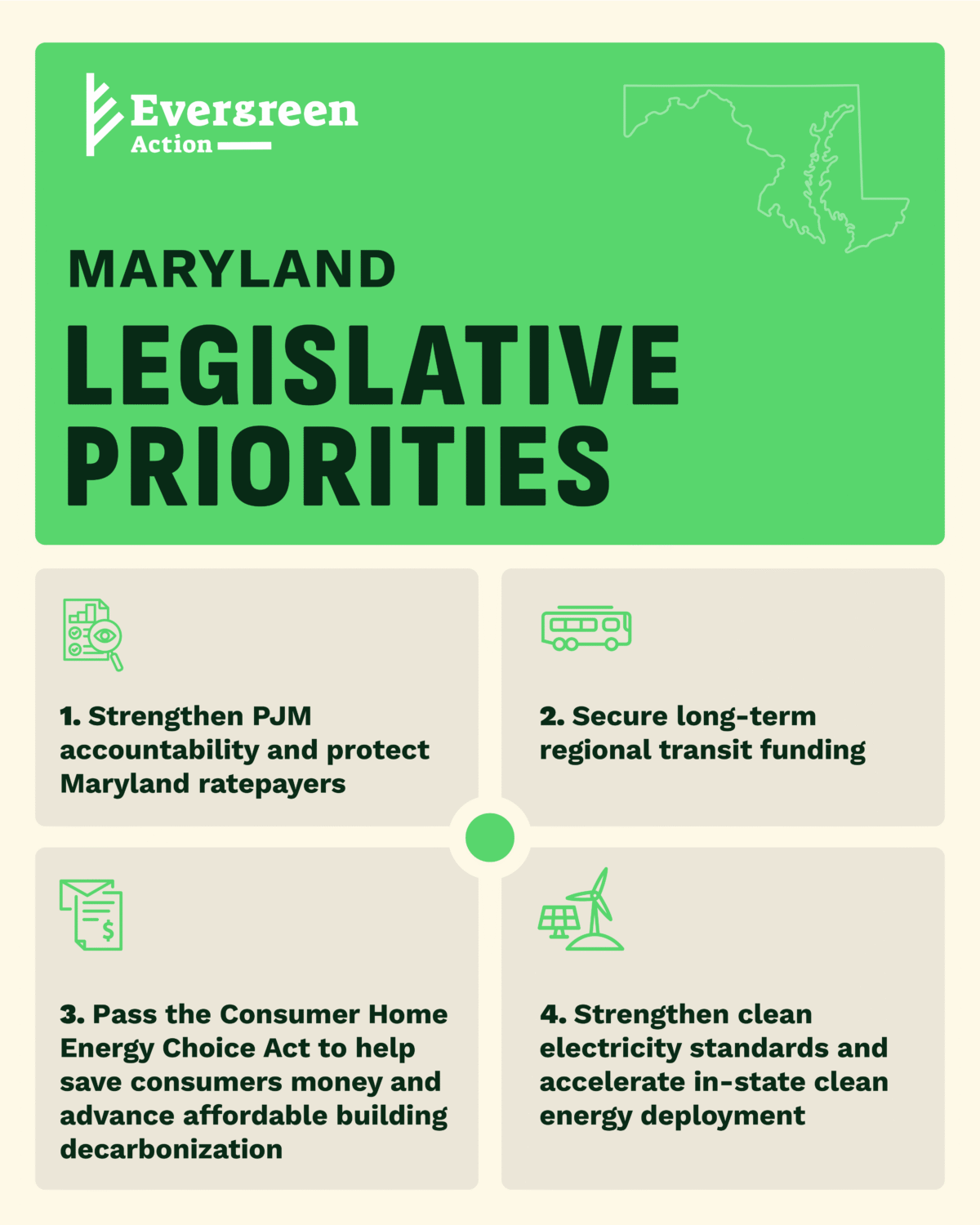
Pass the Consumer Home Energy Choice Act: Rein in excessive gas utility costs and profits, and help families who want to switch to efficient electric options.
Get a better deal from PJM for Marylanders: Push for regional grid reforms that bring new clean power online faster and make large energy users like data centers pay their fair share.
Strengthen clean electricity standards: Update the state’s renewable energy standard to bring more solar and batteries online.for
Secure long-term transit funding: Pass a regional transit framework to support modernizing the Metro, regional rail and buses across Maryland, Virginia and D.C.
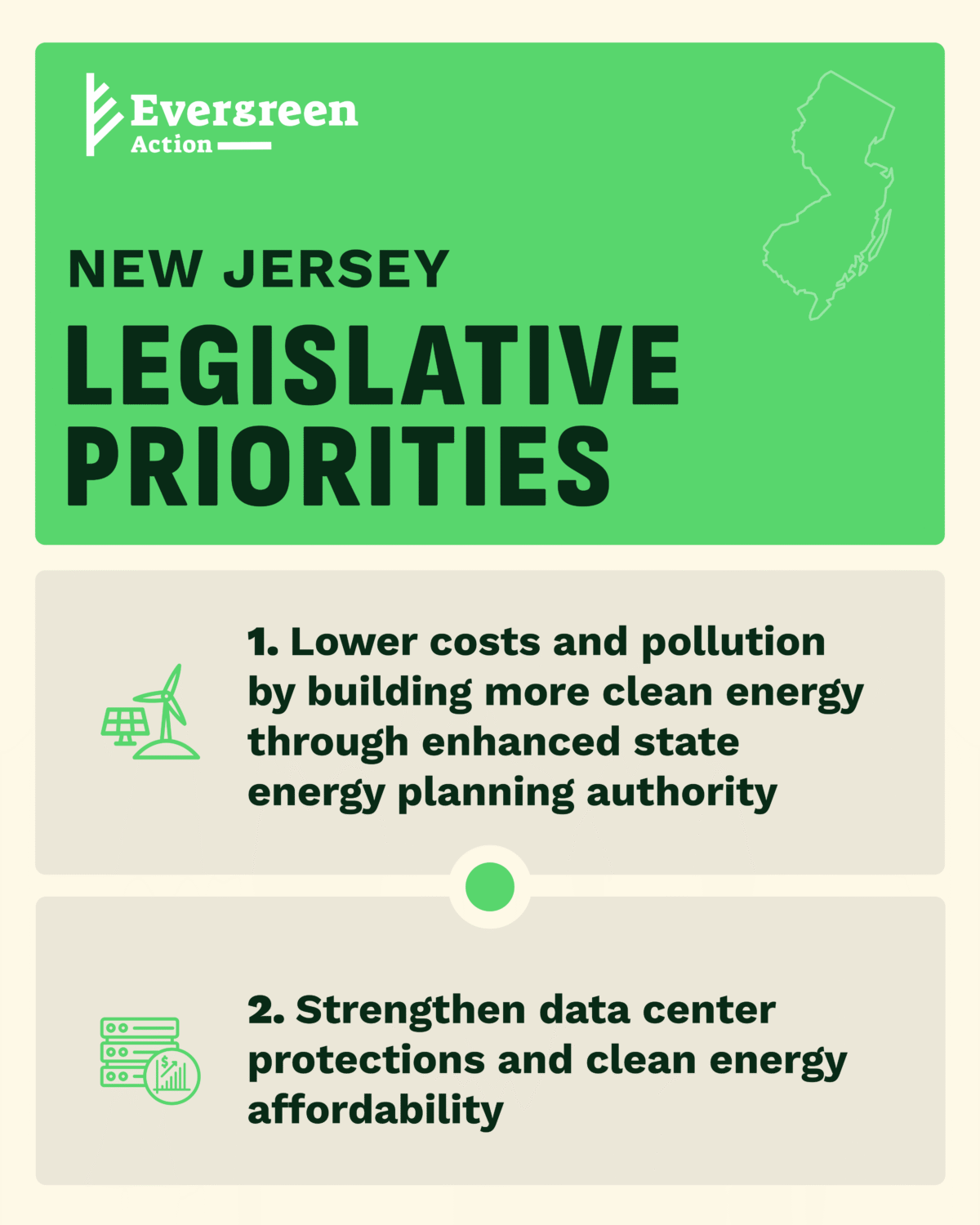
New Jersey: Keep Delivering
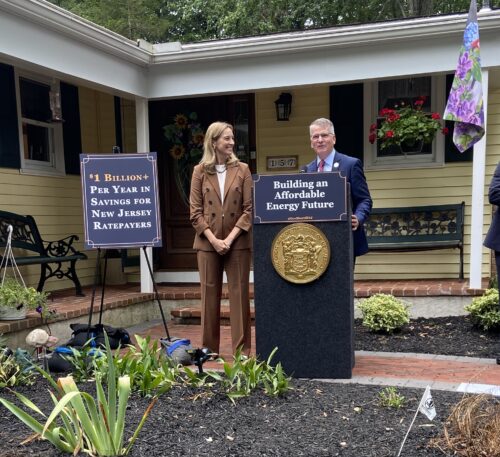
New Jersey shows what winning on energy affordability looks like a year later. Governor Mikie Sherrill ran on lowering bills in 2025, won decisively, and went to work on day one with her first executive order to take on the energy affordability crisis. With no state-level race this year, the ask in Trenton is simple: keep delivering.
What Governor Mikie Sherrill Can Do
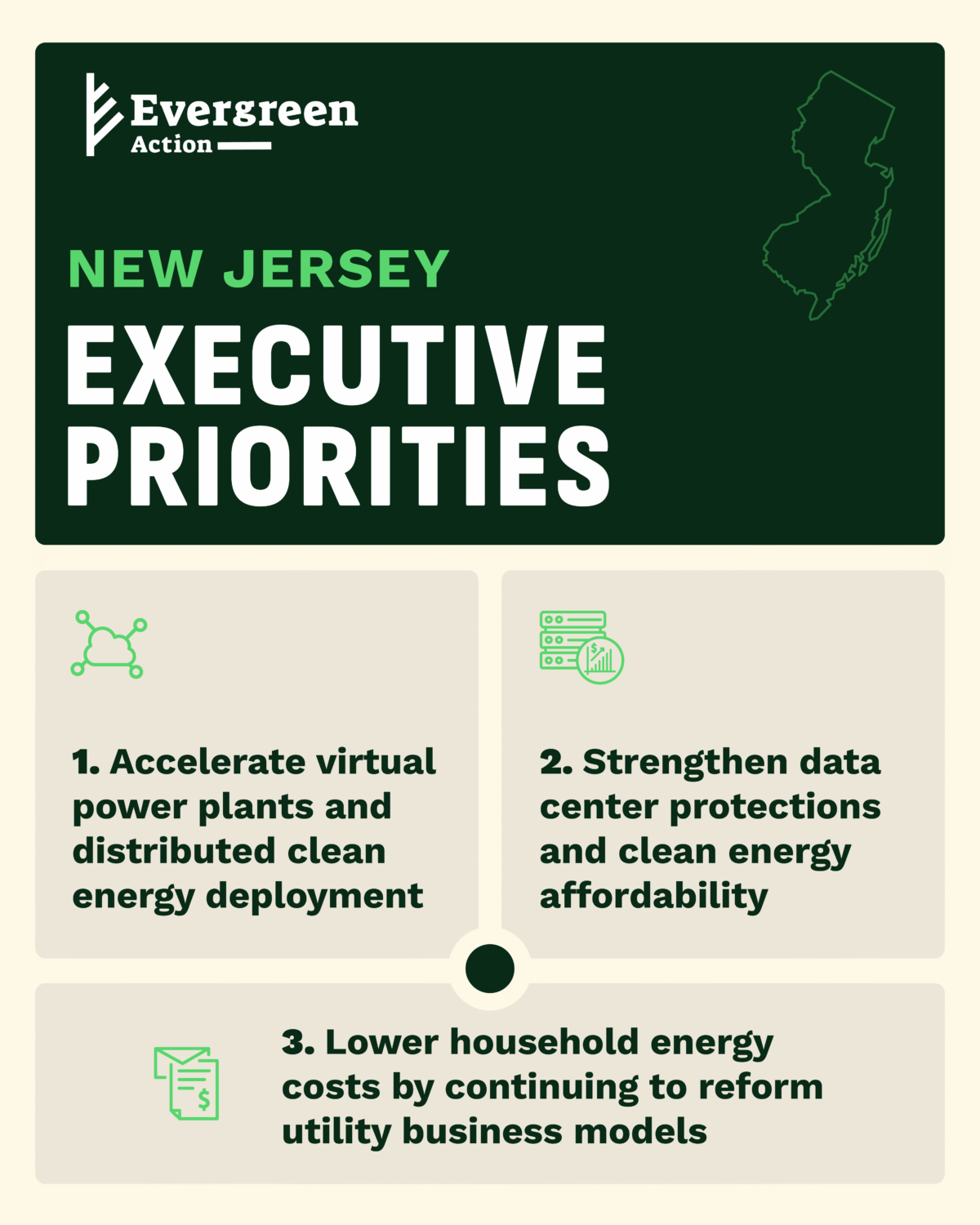
Change how utilities make money. Keep carrying out her day one executive order by reforming utility profits so investments have to deliver real savings for customers.
Scale up virtual power plants. Roll out the statewide program so home batteries and other customer-owned energy cut peak demand and avoid costly new infrastructure.
Shield ratepayers from data center costs. Keep data center costs off customers’ bills while protecting clean energy affordability programs.
What the Legislature Can Do:
Strengthen state energy planning: Better plan the state’s energy mix by considering projected demand and low-cost clean energy needs at the same time and require utilities to consider cheaper options before building new poles, wires and other infrastructure.
Write data center protections into law: Keep data center costs off existing customers bills and require data centers and other large energy users to help pay for the clean power and battery storage needed to meet demand.
Pennsylvania Voters Send Shapiro Back to Harrisburg with Mandate to Deliver Cheap, Clean Energy
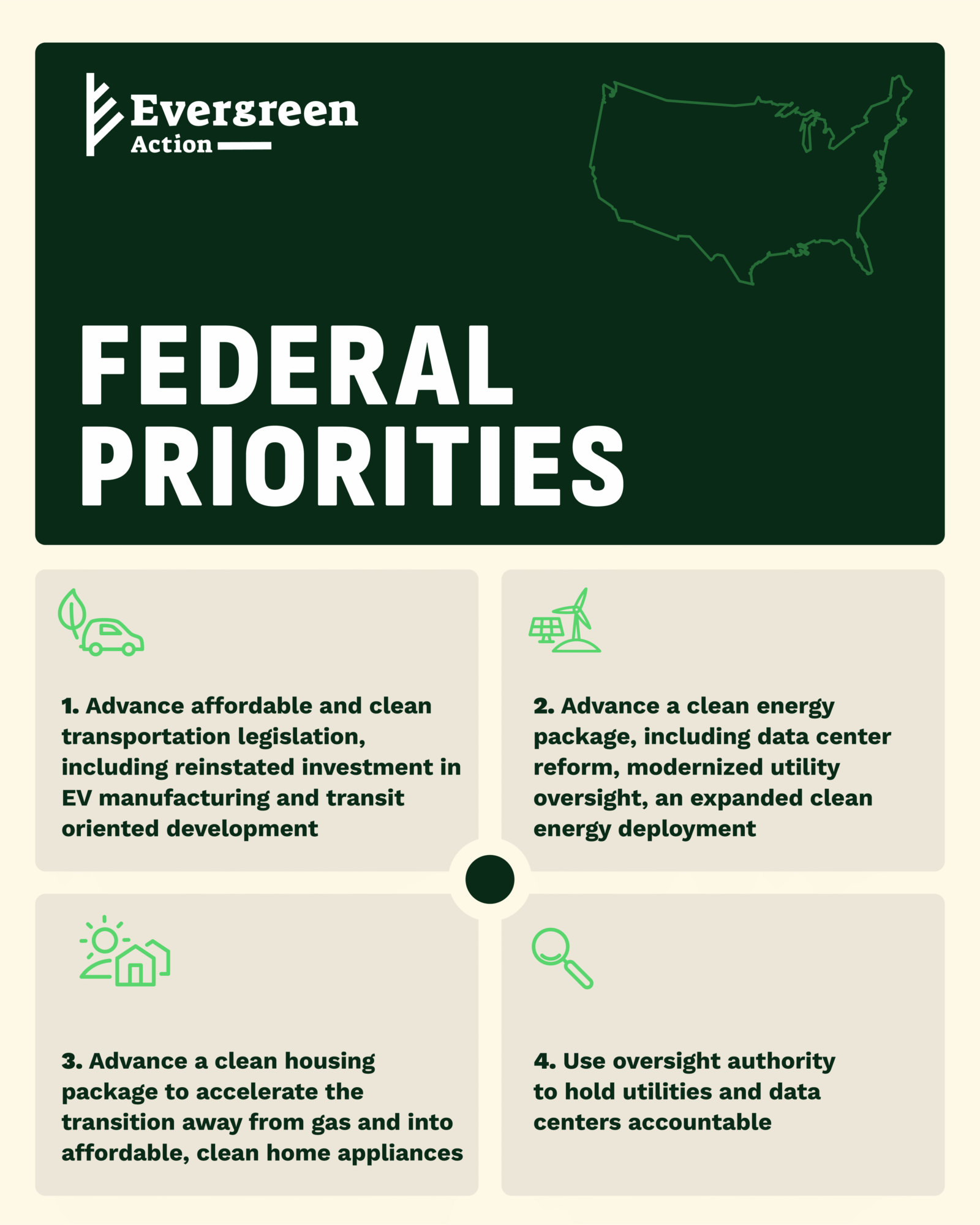
Congress: Accountability Today, a Vision for Tomorrow
New Democratic majorities in Congress have a critical role to play. Specifically: They can hold bad actors accountable for high costs, including the Trump administration, tech billionaires and monopoly utilities. That can simultaneously build support for action in the states while showing voters exactly what a Democratic Congress and White House can deliver in 2029.
What Democratic Leaders Can Shine a Light On
The Trump Administration: This election was largely a rejection of Trump’s failed policies that have made energy prices skyrocket: his war in Iran, his tariffs, his attacks on clean energy.
Utilities: Haul monopoly utility executives before Congress to answer for inflated profits and excessive rate hikes, and for passing up cheap, clean energy and low-cost federal financing that would lower bills.
Grid operators: Make PJM and other regional grid operators answer for years-long delays connecting cheap, clean power and failures to reform a broken system that benefits fossil fuel companies and drains families’ bank accounts.
Big Tech: Make data centers and tech executives answer for the costs they pass on to everyone else while pressing them to commit to clean energy, fair rates, and community benefits.
Democratic Leaders Can Lay Out Their Vision for Change
Make data centers pay: Tax data centers to help fund the power lines and clean energy that lower costs for everyone.
Rein in utility profits: Update outdated federal laws so utilities come out ahead by choosing the cheapest, cleanest power and getting more out of the grid we have, not by charging customers for costly new projects.
Build cheap, clean power faster: Restore theclean energy tax creditsRepublicans repealed, expand low-cost federal financing and speed up permitting for power lines and clean energy.
Cut transportation and housing costs: Invest in clean transportation and American manufacturing, transit-friendly housing, and more efficient homes that cost less to heat and cool.
Build a more affordable, fair economy: In so doing, Democrats can outline their proactive vision that is not only a rejection of Trump’s failed policies, but a roadmap for ending corruption and delivering for working class people and our planet.
—
Voters didn’t hand out a blank check; they handed out a to-do list: lower our bills. Leaders who build cheap, clean power, rein in monopoly utility greed and make data centers pay their own way will have a record to run on in 2027, 2028, and beyond. Evergreen Action helped build this playbook, and we’ll be there every step of the way to help turn it into the bold action voters demanded at the ballot box.