Trump Guts Fuel-Economy Standards, Handing Another Win to Big Oil
Contact: Samah Shaiq
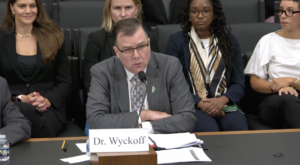
Today, Pete Wyckoff, Evergreen Action’s Vice President of Policy, testified before the House Oversight Subcommittee on Economic Growth, Energy Policy, and Regulatory Affairs. Republicans convened the hearing in an attempt to obscure the real culprit behind skyrocketing energy costs: a president and party who govern for Big Oil and their fossil fuel allies, not for Americans struggling to keep the lights on.
In his testimony, Wyckoff laid out how Trump has systematically sabotaged the fastest-to-build, cheapest new generation we have. While Congressional Republicans attempted to use this hearing to blame state and local governments for rising energy costs, the real culprit is the president who is actively making it harder to bring more affordable energy online, for the benefit of his Big Oil allies. And while Trump dismisses Americans’ concerns about corporations driving up their utility bills, calling them “backwards and poor,” Wyckoff made clear that families are paying more than they should due to this administration’s policies.
“What stands in the way is not efficiency standards in a few blue cities,” said Evergreen Action Vice President of Policy Pete Wyckoff. “It’s an administration that has governed—consistently and deliberately—for its fossil fuel donors at the expense of working families.”
Wyckoff made clear that the path to lower bills exists: cheap, homegrown clean energy that reduces reliance on volatile fossil fuel markets. But the Trump administration has been blocking that path at every turn.
Pete Wyckoff’s Full Written Testimony
Good morning, Chairman Burlison, Ranking Member Frost, and members of the subcommittee. Thank you for the opportunity to testify. My name is Pete Wyckoff, and I serve as the Vice President of Policy at Evergreen Action. Until two months ago, I was Minnesota’s Deputy Commissioner of Commerce for Energy. Before that, I spent seven years in Washington, D.C., as a Senate Energy staffer and at the Department of Energy.
At Evergreen, we focus on making sure American families can afford to heat their homes and keep the lights on, while cutting pollution that harms our health and intensifies expensive, climate-driven weather disasters, which cost Americans hundreds of billions every year.
As President Trump entered his second term, he promised to cut energy prices in half within one year.
Instead, since January 2025, average residential electric bills are up 15% nationwide—and climbing. And utilities have filed more than $100 billion in rate increase requests since he took office. Last quarter, rate increase requests were up 26% from this time last year.
—
Let me explain what—and who—is actually driving those increases. Hint: it’s not a few localities with strong efficiency standards.
From his first day back in office, President Trump has systematically obstructed the path forward for the fastest-to-build, cheapest new generation we have. Here are just a few actions he’s taken:
With his party’s help in these halls, his tax bill killed clean energy tax credits for wind and solar. That decision alone will cost customers in my home state of Minnesota, and others, billions.
Just two weeks ago, President Trump canceled three federally designated transmission corridors—slowing the buildout of desperately needed infrastructure that would lower costs and increase reliability.
President Trump’s trade wars are also making it more expensive to build the infrastructure we need to meet skyrocketing demand. His transformer tariffs alone could cost Texas households an extra $290 a year.
And his administration has spent nearly $4 billion of our taxpayer dollars to cancel offshore wind projects, and it has assembled bureaucratic blockades to the permitting of other clean energy projects. This is stopping affordable power that families were counting on to keep their bills in check.
The math isn’t complicated. When you deliberately choke off cheap new power while demand skyrockets, Americans pay more. Guaranteed.
—
Every one of those decisions follows the same pattern. Ask yourself: who benefits? The answer is clear. President Trump’s energy price hike agenda has only consistently delivered for one group: his fossil fuel allies.
Let me illustrate.
First, President Trump’s tax bill eliminated credits designed to help working families offset the upfront cost of switching from inefficient gas appliances to highly efficient electric ones—which would have cut their bills and reduced dependence on volatile, expensive fossil fuels.
Who benefits? Not the millions of working families denied relief at the exact moment they needed it most. But his fossil fuel allies raked in record profits this summer while American families scrambled to afford to cool their homes in record-breaking heat.
Second, the administration reversed appliance energy efficiency standards that would have saved customers roughly $43 billion.
Who benefits? Not your constituents, now locked into even more expensive gas dependence. But President Trump’s fossil fuel allies are guaranteed a captive customer base.
Third, President Trump is forcing aging coal plants to stay online far past their retirement dates, at a cost of $528 million, and counting, that customers will absorb.
Who benefits? Not the millions shouldering those extra, unnecessary costs. But coal companies will profit even more.
And finally, President Trump’s war in Iran sent gas prices soaring, costing American drivers a whopping $731 extra per household in gasoline and diesel costs so far. President Trump’s own words gave up the game: “When oil prices go up, we make a lot of money.”
Who benefits? Not “we” the people. “We” the president and people like Chevron’s CEO, who pocketed more than $100 million selling company stock as the war raged on, while President Trump’s own oil and gas holdings gained up to $15.5 million as prices soared.
—
Those are the types of things raising energy costs. Now let me turn to what this hearing asserts is behind rising bills:
The building code policies under discussion today apply primarily to new construction. Not to current homes or appliances. That is simply not what these policies do.
And in new construction, the data is clear. Building all-electric from the start is cheaper, both upfront and over time. All-electric homes cost $7,500 to $8,200 less to build. Additionally, new homes built to updated energy codes save owners up to $15,000 over the life of the home. Stronger building codes don’t slow down homebuilding, but they do ensure homes are affordable and safe.
I will acknowledge a real concern. For existing homeowners who want to upgrade, the upfront costs can be a genuine barrier. That is exactly why the Inflation Reduction Act created rebate programs—to help families make that choice, on their own timeline, if they so choose. But the administration has slow-walked those programs, delaying and denying relief to families who need it most.
The answer to the cost of electrifying existing homes is to restore the help President Trump took away. Not to trap new families in gas-dependent homes they’ll spend the next thirty years paying to heat.
—
As I close, picture a future where families live in efficient, affordable homes, insulated from volatile global markets.
The technology exists. The economics are clear.
What stands in the way is not efficiency standards in a few blue cities. It’s an administration that has governed—consistently and deliberately—for its fossil fuel donors at the expense of working families. With considerable help from his allies in these halls.
If this committee is genuinely concerned about energy costs, we’re ready to work with any member, from either party, to pursue what will actually lower bills.
Thank you, and I welcome your questions.
###
Related News
NEW: Trump EPA Moves to Stop Future Presidents From Addressing Power Plant Climate Pollution
NEW: Trump EPA Moves to Stop Future Presidents From Addressing Power Plant Climate Pollution
ICYMI: Evergreen’s Pete Wyckoff Calls Out Real Culprit Behind Rising Energy Bills in GOP Congressional Hearing
ICYMI: Evergreen’s Pete Wyckoff Calls Out Real Culprit Behind Rising Energy Bills in GOP Congressional Hearing
Trump’s Failed Energy Policies Help His Big Oil Allies Rake in Record Profits